





News
The fund supports parent-led peer support initiatives, helping parents and carers share experiences, reduce isolation, and support one another through challenges.
Two funding levels are available:
Tier 1: €2,500 grants for organisations starting or running parent peer support projects.
Tier 2: €5,000 grants for organisations looking to expand successful existing projects.
A total of 56 organisations will receive funding:
41 organisations under Tier 1.
15 organisations under Tier 2.
Minister Norma Foley announced that funding has increased by 13% compared to last year, allowing more parents to benefit from support programmes in 2027.
The fund is part of the government's commitment under Supporting Parents: A National Model of Parent Support Services and the First 5 Strategy 2019-2028.
Previous funding supported a wide range of parents, including those with children who have:
Additional support needs
Mental health challenges
Hospital care needs
LGBT+ identities
Families affected by domestic violence
Applications close on Monday, 2 November 2026, with funding to be distributed in early 2027.
Further information and application forms are available from the Department of Children, Disability and Equality, and queries can be sent to peipolicyunit@dcde.gov.ie.
The conference brings together around 300 young people, policymakers, and youth representatives from across Europe to discuss the future of youth policy.
Discussions focus on EU Youth Goal 4: Information and Constructive Dialogue, with recommendations feeding into the next EU Youth Strategy, which is planned for 2027.
The Minister stressed the importance of ensuring young people's voices are heard and reflected in decision-making at local, national, and European levels.
A key theme of the conference is helping young people access reliable information, develop critical thinking skills, and participate actively in democracy.
The event includes workshops, dialogue sessions, and policy discussions where young people and decision-makers work together to develop recommendations.
The Minister highlighted that constructive dialogue and trustworthy information are essential for active citizenship and healthy democracies.
Senior representatives from EU institutions, including European Commissioner Glen Micallef, are participating.
The conference reflects Ireland's commitment to youth participation, democratic engagement, and ensuring young people's perspectives influence European policymaking.
The conference is organised by the Department of Education and Youth and the National Youth Council of Ireland (NYCI).
Around 300 young people, policymakers and youth representatives from across Europe will attend.
The event is part of the EU Youth Dialogue, which enables young people to contribute to European policymaking.
Discussions will focus on EU Youth Goal 4: Information and Constructive Dialogue.
Outcomes from the conference will help inform the next EU Youth Strategy, due to be launched in 2027.
Minister for Education and Youth Hildegarde Naughton will welcome delegates, including the European Commissioner responsible for youth.
Ireland will be represented by three youth delegates selected through the Young Voices: EU Youth Dialogue programme run by NYCI.
Young people will participate in workshops, dialogue sessions and policy discussions, engaging directly with decision-makers.
Key themes include:
Meaningful youth participation in decision-making.
Access to reliable information.
Democratic engagement.
Constructive dialogue and inclusion.
NYCI emphasised that young people should be involved in shaping policies from the outset, not simply consulted after decisions have been made.
The conference will highlight Ireland's commitment to strengthening youth participation at both national and European levels.
The Forum is the final stage of a nationwide consultation that will help shape future early learning, childcare policy, and the successor to the First 5 strategy.
Public engagement was significant, including:
11,725 online survey responses
A survey of 600 parents
55 consultation events held across all counties
Children's participation through Children's Creative Spaces.
The top priorities identified by parents were:
Access to childcare places
Affordability
A sustainable childcare workforce
The Minister noted that these priorities align with the goals already set out in the current Shaping the Future action plan.
The Forum brings together parents, educators, childcare practitioners, providers, and representative groups to discuss future priorities for the sector.
Children from Bridget's Montessori, Co. Meath were recognised for their contribution to the consultation and took part in an arts workshop.
Minister Foley stressed the importance of ensuring childcare services are affordable, accessible, and high quality.
She also emphasized that children's voices should remain central to future policy and decision-making.

13 to 15-year-olds can use "mini accounts" with parental supervision and restrictions.
Addictive features for minors prohibited, including:
Infinite scrolling
Autoplay
Push notifications
Behaviour-based recommendation feeds
Strict age verification required; self-declared ages will no longer be enough.
Rules apply not only to social media but also to video games, app stores, video-sharing platforms, AI chatbots, and AI companions.
All services must be "safe by design", putting child protection at the centre of product design.
Parents will have new tools to:
Manage screen time
Approve contacts
Control access to services
Report harmful content
Platforms cannot track minors' locations or activate cameras/microphones without user action.
Games and apps must be age-rated and prevent access to inappropriate content or purchases.
Large technology companies must prove compliance and could face fines of up to 6% of global annual turnover for breaches.
The proposal aims to address:
Excessive screen time
Cyberbullying
Harmful content exposure
Mental health concerns linked to online platforms
The legislation has been proposed by the European Commission but still needs approval from the European Parliament and EU member states before becoming law.

A study by the ESRI found that:
Over 30% of post-primary schools require students to have their own digital device.
17% of DEIS schools also have this requirement.
This creates a financial burden for families, particularly those on lower incomes, and risks widening the digital divide.
While the Government provides ICT funding to schools, there is a gap between this funding and the cost of devices that many schools expect parents to purchase.
The article argues that if a student cannot fully participate in school without a laptop, then it should be considered an educational necessity, not simply a consumer item.
The author supports digital learning but questions whether it is fair for families to bear the cost of devices required for education.
Possible solutions include:
School device-loan schemes.
Increased State funding for devices.
National maintenance and replacement programmes.
Clearer rules on when schools can require students to provide their own devices.
The key message is that Budget 2027 should address the cost of digital education and ensure that access to necessary technology does not depend on a family's ability to pay.
The initiative aims to tackle period poverty, support student wellbeing, and ensure no student misses education because they cannot afford period products.
It is the first phase of the Government's commitment to make free period products available in schools nationwide.
A €100,000 fund has been allocated to support the scheme.
Schools in 13 counties will benefit, including Dublin, Cork, Galway, Limerick, Donegal, Waterford, Wexford and others.
The scheme was developed following consultation with students, teachers and principals.
Feedback showed strong support for the initiative, with concerns raised about:
Rising costs of period products
Period poverty
Stigma associated with not being able to afford products
The impact on attendance and participation in school
Students requested:
A choice of products (pads and tampons)
Good-quality products
Discreet access in bathrooms and other locations
Clear information on where products are available
Funding for each school is based on the estimated number of students likely to require period products.
Schools will receive implementation guidance covering procurement, safety, awareness-raising and distribution.
Minister Hildegarde Naughton said access to period products is a matter of dignity, equality and educational participation, and that no student should be disadvantaged because of period poverty.

37 courses recorded lower points.
24 courses increased.
4 courses remained unchanged.
The university made over 4,000 offers and expects more than 3,800 new students to enrol.
Popular courses saw mixed results:
Arts: down 13 points to 337.
Commerce: down 3 points to 451.
Law: down 11 points to 509.
Science: up 15 points to 455.
Medicine: up 2 points to 730.
Largest decreases included:
Arts (Child, Youth and Family: Policy and Practice): down 70 points.
Arts (Mathematics and Education): down 52 points.
Commerce International with German: down 50 points.
Largest increases included:
Drama, Theatre and Performance: up 44 points.
Gaeilge agus Léann an Aistriúcháin: up 37 points.
Podiatric Medicine: up 32 points.
Energy Systems Engineering: up 23 points.
Engineering courses remained strong, with all programmes staying above 500 points.
A new BSc in Zoology was introduced, with a first-round cut-off of 473 points.
Key Takeaway
Despite record application numbers, University of Galway experienced a mixed year for CAO points, with many courses seeing lower entry requirements while a number of specialist, science and engineering programmes became more competitive.
The platform is described as a"living resource" that helps young people and families find youth services in their local area. It provides:
Service locations
Contact details
Website links
Information on facilities
Accessibility details
The map includes a wide range of youth-focused supports, including:
Youth Clubs
UBU Your Place Your Space services
Youth Information Centres
Scouts and Guides
Irish-language youth clubs
National Youth Organisations
Comhairle na nÓg
TYESI employability projects
Services for Traveller and Roma young people
Minister Naughton said that youth work is important for helping young people build confidence, develop skills, make connections, and have their voices heard, but people need to know what services are available in order to access them.
Young people were involved in the consultation and user-testing process to ensure the website is accessible, user-friendly, and meets their needs.
The project delivers Action 9 of the National Strategy for Youth Work and Related Services 2024-2028, which aims to map youth services and facilities across Ireland.
The website is now live and will be continually updated and maintained.
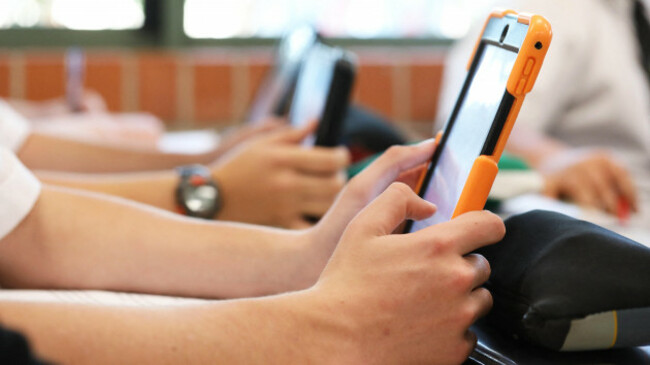
While the Free Schoolbooks Scheme has helped families, many parents are now being asked to pay hundreds of euro for iPads, tablets, or laptops that schools expect students to use daily. Some device packages cost €700 or more, and parents often have little choice over what they buy.
The author highlights research showing that many secondary schools require digital devices and that families can face additional costs for software, technical support, warranties, and accessories. This creates financial pressure, particularly for households with more than one child, and risks widening educational inequality between students who can afford devices and those who cannot.
The article stresses that technology can be valuable in education, but argues that the burden of funding it should not fall on families alone. Instead, the government should develop a national approach, including clearer rules on device requirements, increased ICT funding for schools, support for repairs and maintenance, centralised purchasing to reduce costs, and loan schemes for students.
The central message is that if digital devices are essential for participation in public education, every child should be able to access one regardless of their family's income.
The group went on to establish Abacas School for Autistic Children with Complex Needs in Drogheda in 2003, which has since grown into a recognised special school supporting 31 students.
The school provides specialised education focused on communication, social skills, emotional regulation and independence.
The wider community initiative also led to the creation of Autism Support Louth & Meath, offering advocacy, training, family support and youth programmes.
A youth club that started with two teenagers now supports up to 160 autistic children, young people and adults, helping them build friendships and social connections.
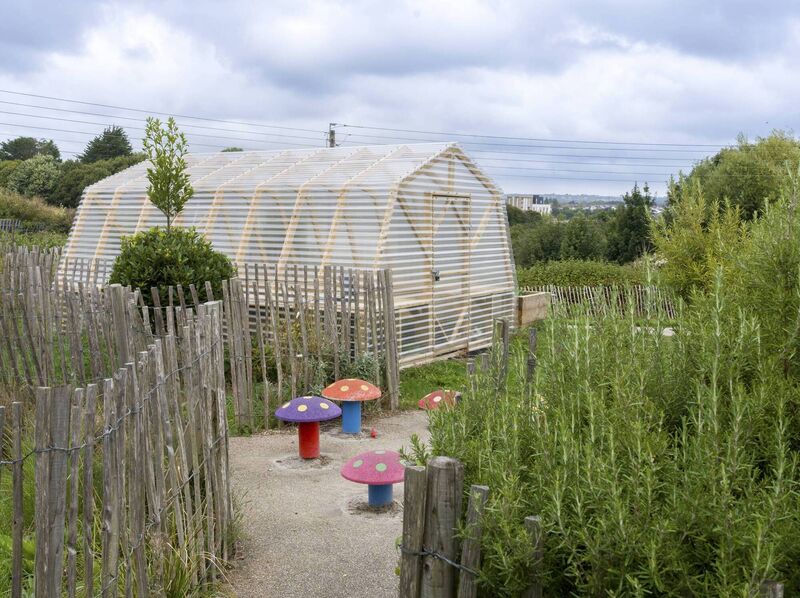
Fundraising and support from Tesco Ireland, including a €25,000 Community Fund grant, helped create the school's sensory garden, a safe outdoor space for children and families.
Walsh highlights the importance of community support, saying that strong networks of parents, volunteers and local businesses have transformed opportunities for autistic children and their families.




They describe the current system as outdated, overly stressful, and anxiety-inducing for students.
The call comes as Round One CAO offers are issued to thousands of students.
Concerns have been raised about the increased use of random selection (lotteries) for oversubscribed courses, meaning some students with top grades can still miss out on places.
The groups argue the system:
Places too much emphasis on a single exam result.
Creates excessive pressure on students.
Does not fully recognise students' talents, interests, and abilities.
Can lead students to choose courses based on points rather than suitability.
They want a system that:
Recognises a broader range of achievements.
Supports meaningful learning.
Better matches students' abilities and interests with higher education opportunities.
The Government has already committed in its Programme for Government to working on reforms of the CAO system.

Children bring an "invisible schoolbag" of knowledge, skills and experiences gained through family life, community activities and early childhood education. These experiences help them adapt to school and continue learning.
Most children have a positive start to primary school. Research shows that the majority enjoy school, like their teacher and make friends, with excitement often outweighing nervousness.
Transition is a shared responsibility. Families, preschool educators and primary school teachers can work together to support children by sharing information about their interests, strengths and any support needs.
Building relationships before school starts is important. School visits, open days and meeting teachers can help children and parents feel more comfortable and connected to the school community.
Play remains an important part of learning. Primary schools build on children's previous learning experiences through play-based and hands-on learning approaches.
Families can support children emotionally and practically.
Talk about starting school and encourage children to express their feelings.
Read books or stories about school.
Provide comfort items if needed.
Help children develop independence with dressing, toileting, opening lunch containers and managing their belongings.
A calm and positive first day helps. Keeping routines simple, offering brief goodbyes and trusting teachers to support children can ease anxiety.
Children adjust at different rates. Some settle quickly while others need more time, patience and reassurance.
Overall Message
Children start primary school with many strengths and experiences already in place. By working together and providing emotional, social and practical support, families and educators can help ensure a smooth, positive transition into primary school.

Academic effort and academic results do not always match. Some children need to work much harder than others for lower grades, despite showing equal or greater commitment.
Parents often focus heavily on grades, Leaving Cert points, subject levels, and college entry requirements. While these conversations are usually well-intentioned, they can be difficult for parents whose children are struggling academically.
The author warns against assuming that a child's academic success is solely due to parenting or hard work. Natural differences in ability, learning style, organisation, and academic strengths also play a significant role.
Children should not be judged primarily by exam results. Effort, persistence, resilience, and personal growth deserve recognition just as much as high grades.
Struggling academically can damage a child's self-esteem if they begin to see poor results as evidence that they are incapable or less valuable. Parents often work hard to prevent this mindset from developing.
Gifted children face challenges too. If they become defined by being "the clever one," they may struggle when success no longer comes easily.
Parents should celebrate achievements but remain mindful that other families may be having very different educational experiences.
Success in life depends on many qualities beyond academic performance, including creativity, empathy, humour, reliability, practical skills, emotional intelligence, persistence, and the ability to build relationships.
The author's central message is that parents should value their children as people first and view exam results as only one measure of ability. A child's character, wellbeing, and resilience matter more than a points tally.


Nearly 80% of children never cycle to school, despite 70% of parents saying cycling would be their preferred way for the school run.
Only 5% of children cycle daily, while another 8% cycle occasionally.
Most parents (81%) believe their children cycle less than they did at the same age.
The main barriers identified were:
Distance to school (54%)
Heavy school bags (41%)
Poor weather (39%)
Parents' lack of confidence cycling with children (22%)
For secondary school students, additional obstacles included:
School uniforms being unsuitable for cycling (49%)
Lack of cycling confidence (46%)
Concerns about appearance after cycling (42%)
Almost half of parents (48%) said safer cycling infrastructure would be the most effective way to increase cycling to school, while 28% supported a dedicated Bike to School scheme.
Commentators and cycling advocates interviewed by RTÉ and Newstalk welcomed the findings but stressed that road safety and perceived danger on roads remain major reasons why families are reluctant to let children cycle.
The article concludes that while census data shows some recent recovery in cycling to primary schools, cycling levels remain far below those seen in the 1980s, especially among secondary school students.

Top grades have fallen as the Government continues to reduce pandemic-era grade inflation:
Overall H1 grades dropped from 12.1% to 10.1%.
Higher Level Maths H1s fell from 11% to 8.1%.
English H1s fell from 5% to 4.3%.
Irish H1s fell from 11% to 10%.
More than one-third of grades were boosted through post-marking adjustments, although these adjustments were smaller than in recent years.
The Government plans a gradual return to normal grading, with full removal of pandemic-related adjustments by 2028.
Despite the reduction, H1 rates remain much higher than before the pandemic. In 2019, only 5.9% of higher-level grades were H1s.
At Christian Brothers College in Cork, eight students achieved 625 points, and 16 students scored over 600 points.
Students can view detailed marks and adjustments from 25 August.
The first round of CAO offers will be issued on 26 August at 2pm.
Education Minister Hildegarde Naughton said the transition back to normal results will continue over the next two years.
TUI General Secretary Michael Gillespie congratulated students and emphasized that Leaving Cert results are the start of a new journey, not the end, and that success is not solely about CAO points.

Upcomming Training

This online information session supports parents of children in 5th and 6th class as they prepare for the move from primary to post-primary school.
The transition can bring excitement, questions and worries for both children and parents. During the session, parents will receive practical information and guidance to help their child feel prepared, confident and supported.
The session will explore common concerns about starting post-primary school, building independence, managing new routines, communicating with the school and supporting your child through the changes ahead.
The session will explore how parents can help their child feel safe, confident and heard, as well as how to communicate effectively with their child’s primary school when concerns arise. Parents will also learn about positive ways to support kindness, inclusion and respectful behaviour.
The aim is to help parents feel better informed and more confident in supporting their child and working in partnership with their school. This reflects NPC Primary’s wider focus on helping children feel safe, supported and valued.

The session also looks at the impact bullying can have on a young person’s wellbeing, friendships and school experience, while offering clear guidance and practical strategies parents can use at home.

The session provides practical guidance on some of the opportunities and challenges children can experience online, including privacy, online communication, inappropriate content, gaming, social media and managing screen time.
Parents will also explore ways to keep conversations about online life open and positive, set appropriate boundaries and help their child develop the skills they need to make safer choices online.

Parents will explore practical ways to start conversations, listen without judgement and create an environment where their teenager feels comfortable asking questions and talking openly. The session aims to give parents greater confidence to discuss relationships and sexuality while supporting their teenager to develop healthy attitudes, boundaries and decision-making skills.

The session explores key themes including kindness, respect, inclusion and belonging, and looks at how parents can support children as they navigate friendships, communication and relationships with others.
Parents will receive practical guidance and ideas they can use at home to encourage empathy, positive behaviour, healthy boundaries and respectful relationships as their child grows.

Following on from Part 1 of our RSE three-part programme, this session explores active listening skills and how communication can strengthen relationships and support conversations with your child.
As children move through the post-primary years, conversations can sometimes feel shorter, more guarded, or harder to navigate. This session will help parents develop practical communication skills to support connection, trust and healthy relationships.
This session will explore:
• Active listening skills
• Supporting meaningful conversations
• Building trust and communication
• Strengthening your relationship with your child
This session is ideally suited to parents who have completed Part 1, but it also works as a stand-alone session.

The session explores how listening, respect, trust and everyday conversations can help build a strong parent–child bond. It also looks at how parents can support their child as they develop relationships, confidence and independence.
Parents will receive practical guidance and ideas they can use at home to encourage positive communication and support healthy relationships as their child grows.

The session looks at key qualities including respect, trust and support, and offers practical guidance to help parents talk with their child about friendships, communication, boundaries and treating others with care.
It is designed to give parents greater confidence in supporting their child as they build and navigate friendships throughout primary school.

The session looks at key qualities including respect, trust and support, and offers practical guidance to help parents talk with their child about friendships, communication, boundaries and treating others with care.
It is designed to give parents greater confidence in supporting their child as they build and navigate friendships throughout primary school.

Parents will explore the factors that can influence a child’s mental health, practical ways to build and nurture resilience, and everyday approaches that can help children manage emotions and cope with the normal challenges and stresses of life.
The session also looks at the important role parents and families play in supporting children’s wellbeing, as well as why looking after your own wellbeing matters too.

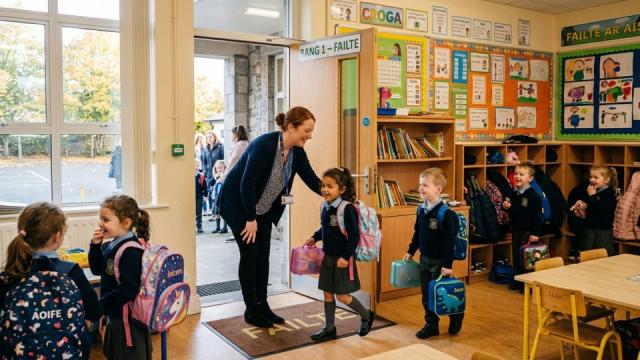
The session looks at practical, everyday ways parents can support the transition, including building confidence and independence, preparing for new routines, managing lunchboxes, coats and belongings, supporting children emotionally, and strengthening the connection between home, Early Years settings and primary school.
It also recognises the important skills and experiences children already bring with them from Early Years — including play, communication, relationships and growing independence — and explores how parents can build on these strong foundations as their child takes the next step.

The transition can bring excitement, questions and worries for both children and parents. During the session, parents will receive practical information and guidance to help their child feel prepared, confident and supported.
The session will explore common concerns about starting post-primary school, building independence, managing new routines, communicating with the school and supporting your child through the changes ahead.

Early Years Mental Health – Supporting Your Little One’s Big Emotions is a free online information session for parents. It offers practical, everyday ideas to help you support your child’s emotional wellbeing and respond to the big feelings that are a normal part of growing up.

Welcome to


Welcome to the Early Years section of the National Parents Council (NPC) website. Here, we support parents and guardians of young children, from birth to six years old, with a range of resources, advice, and information. Discover insights on developmental milestones, parenting tips, early learning activities, and childcare options. Our goal is to empower you with the knowledge and tools to give your child the best start in life. Explore our Early Years section to nurture your child's growth and development.
Guidance and resources to help you support your child’s early learning and development at home.
.jpg)
Speak with our trained advisors for expert advice on parenting and early education challenges.

Interactive sessions to equip parents with practical strategies for supporting young children's learning and well-being.
.jpg)




The primary school years are a crucial time for your child’s growth, learning, and development. As a parent, your role in supporting their education and well-being is more important than ever. This section provides guidance, resources, and practical support to help you navigate your child’s school journey.
From understanding the curriculum to building positive study habits and supporting emotional well-being, we’re here to help. Explore our parent support services, confidential helpline, and engaging workshops and training designed to equip you with the knowledge and confidence to support your child’s learning and development.
“The NPC workshops on play-based learning gave us amazing ideas to help our child learn at home. Highly recommend them to all parents!”
.jpg)
“The NPC workshops on play-based learning gave us amazing ideas to help our child learn at home. Highly recommend them to all parents!”

“The NPC workshops on play-based learning gave us amazing ideas to help our child learn at home. Highly recommend them to all parents!”
.jpg)


The post-primary years are a time of major transition, growth, and new challenges for both students and parents. As your child navigates secondary school, exams, friendships, and future career choices, your support and guidance remain essential.
This section provides practical resources to help you support your teenager’s education, emotional well-being, and future planning. Whether it’s understanding the curriculum, preparing for exams, or managing the transition to further education or employment, we’re here to help. Explore our parent support services, confidential helpline, and expert-led workshops and training designed to equip you with the knowledge and confidence to guide your teen through these important years.
Interactive sessions to equip parents with practical strategies for supporting young children's learning and well-being.
.jpg)
Speak with our trained advisors for expert advice on parenting and early education challenges.

Guidance and resources to help you support your child’s early learning and development at home.
.jpg)
Fáilte – Welcome to the National Parents Council (NPC)
The National Parents Council (#NPC) is the independent, parent‑run organisation that champions the rights, voices and hopes of families in every corner of Ireland. Since 1985 we’ve worked hand‑in‑hand with parents, schools and policymakers to build an education system where every child – from playgroup tot Junior Infants, all the way to Leaving Cert – feels valued, included and supported. We run a confidential helpline staffed by experienced advisers, deliver free workshops on everything from internet safety to exam stress, and train Parent Associations so they can drive positive change in their own schools. Our research and advocacy have helped shape national policies on class size, special‑needs supports, anti‑bullying measures and free schoolbooks. Whether you need quick advice, practical resources or a platform to make your voice heard, #NPC is here to back you all the way.
Your independent, parent‑led voice in Irish education
Here at #NPC we stand shoulder‑to‑shoulder with mums, dads, guardians – anyone raising a child – to make sure every young person gets the best start in life.
-
Free, confidential helpline and expert advice
-
Practical training and workshops from Early Years right up to Leaving Cert
-
Strong national advocacy that keeps the parent voice at the heart of education policy
-
Resources and tips to help you support learning, wellbeing and school engagement
Looking for guidance, community or a chance to shape change? You’re in the right place.